The G Corp Ecosystem
A New Collaboration Ecosystem For Good
By Elliott Bayev
We all want good in the world, and our organizations - businesses, non-profits, communities, and funds - are some of our most powerful tools for actualizing it. The problem is, no org suffices to enact the scale of good needed, and there are flaws and limits to current forms of collaboration.
When organizations collaborate, they do so in one of a few forms - partnerships, the forming of larger associations, or creating a new umbrella entity. These structures can be useful at addressing and meeting narrow, focused objectives, but today, we face global challenges.
Corporations do some of the greatest good globally, serving the needs of countless people. They are restricted by a fiduciary duty to prioritize profit however, which has led to the perhaps equally great harm having been committed.

The B Corp is a good step forward in corporate design as it untethers the purpose, mission, and legal guardrails of a corporation from profit, alone. They are able to sacrifice some amount of profit for public good. The problem is, no matter how much good a B Corp does in the world, it is focused on its own pocket of the universe.
There is no unifying mission to which they all belong, and so while some good is being done, it is not part of an aligned, collective effort, informed by what is actually required, globally.
A new approach is needed.
A Message Hidden In A Symbol
The Global Unity logo is based on the Seed of Life. More than a symbol, it holds within it a message - instructions for a new form of collaboration.
When two organizations work together,

they don't completely overlap,

they "Venn diagram" - intersect each other.
They "hold hands".

If an organization can overlap with another, then it can do it with many.

And if one can do it with many,
they all can.
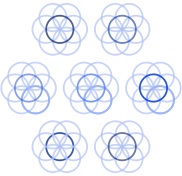
And suddenly we have the blueprint for a
lattice that can envelop the world.

The G Corp is the next step in the evolution of corporate design - an organization that is explicitly in support of a united humanity. What does that mean? Not only does it focus on ensuring social good as well as profits, but it is part of an ecosystem of other corporations doing good, all in support of a specific global plan for great good at scale, Global Unity.
Aside from the satisfaction of contributing to a meaningful, impactful effort that can actually achieve great global impact, G Corps are empowered to celebrate their affiliation through displaying a crest on their sites and products indicating that "We are a company that supports a united humanity."
Solving For Certification
B Corp certification is such a costly, arduous process of proving one's beneficence and sustainability that in many cases, neither small nor very large organizations can participate. By contrast, G Corp classification is a membership of organizations that support both the spirit of a united humanity, and the specific efforts of Global Unity. As such, the process of becoming a G Corp is relatively simple and requires a modest contribution to Global Unity - 1% of profits*.
*There are variations on this contribution, but the basic membership starts here.
This structure allows for companies to ostensibly collaborate without having to change their daily activities - by simply becoming G Corps, they collectively support a focused effort for creating good at scale.
Beyond Corporations – A Cross Organization-Type Collaboration Ecosystem
Corporations, however, are not the only type of organization which do good. Would Unicef or Amnesty International want to be a G "Corp"? They likely want to have nothing to do with being classified as a corporation. As such, a new classification is required - the G Org.
Similarly, associations and communities are neither corporations, nor are they what we classically think of as organizations. Thus, another classification is required - the G Community.
Finally, family offices, foundations, and investment funds also don't fit with the above labels and so yet another classification is required - the G Fund.
By creating a classification ecosystem for all types of organizations - corps, orgs, communities, and funds - that doesn't require them to jump over massive hurdles or change their regular activities, we offer new mechanisms to create good at scale.
Beyond Classification or Certification - Globally Informed, Targeted Impact
When organizations work together, it is generally to achieve greater profit or impact than possible alone, but that impact is itself, rarely part of a larger, comprehensive plan or effort. Moreover, it is generally ushered forward by the organizations themselves, not an outside observer or coordinator who has as its focus, identifying what impacts are needed, where.
Aside from the B Corp Certification, there are a number of "goodwill certifiers" such as 1% For The Planet and The 1% Pledge. These orgs verify that member companies dedicate a percentage of profits to social and environmental efforts. Those efforts however, are not inherently connected to each other. Through the G Corp Ecosystem, organizations can have the confidence that their support is going towards unified, coordinated efforts that address what the world really needs.
This is where the Global Unity's G Corp Ecosystem offers something new. Global Unity (GU) and its massive global community of change-makers, social entrepreneurs, venture capitalists, indigenous leaders, technologists, etc - as well as their partner organizations - are engaged in "need cartography," identifying what is truly needed - where and by whom.
This uniquely positions GU to be able to not only identify what efforts, actions, creations, and interventions are needed, enabling us to invite targeted collaborations.
By putting the challenges we are looking to address and the impacts we are aiming to create at the centre of the circles, we can identify and invite appropriate organizations to come together for that end, which is part of a larger, collective, cohesive meta-effort.
You're invited.
While Global Unity's G Corp Ecosystem creates new possibilities for orgs of all types to do good globally, we invite you to join and be part of great change at scale.
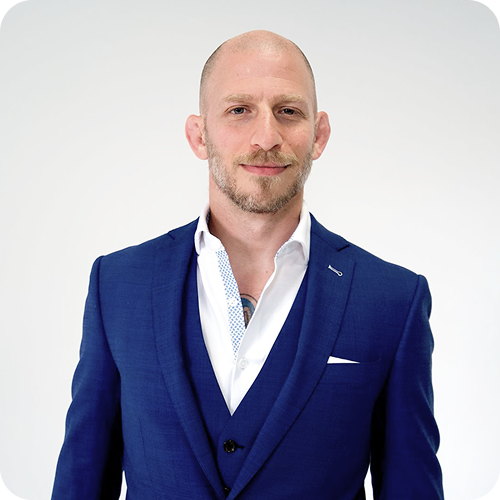
ELLIOTT BAYEV is a systems thinker, convenor of wealthholders, and global change architect. Founder of Global Unity, Transformative Ventures Family Office, Philanthropist, and Impact Investor Community, and Transformative Impact Summit, Elliott is working with a global community of changemakers, founders, funders, and policymakers to build new infrastructure, systems, and communities in service of all life.
To connect, message him at connect@Transformative.global.
The GCorp Ecosystem is Launching Soon
Join the waitlist to get exclusive updates on our launch. Be among the first set of pioneering corps, organizations, and funds to join the ecosystem.